The live entertainment industry stands at a precipice of unprecedented transformation. For decades, the core value proposition of a concert, a theatrical performance, or a sporting event has remained remarkably static: a physical gathering of people in a fixed venue, sharing a singular moment in time. However, the convergence of advanced networking, immersive display technology, and sophisticated data analytics is dissolving the boundaries of what constitutes a “live” event. The future is not about replacing the visceral thrill of a packed arena; it is about augmenting, distributing, and personalizing that thrill across physical and digital dimensions. We are moving from a model of passive attendance to one of active, multi-sensory participation, where the experience begins long before the lights dim and continues indefinitely after the encore.
The Hyper-Physical Venue: Sensory Overload Reimagined
The physical venue will not disappear; rather, it will evolve into a “hyper-physical” environment designed to exploit every human sense beyond sight and sound. The traditional stage and seating arrangement will give way to fluid, adaptive architectures. Haptic feedback systems embedded in seating and flooring will transmit the vibration of a bass line directly into the patrons’ skeletal structure, making the music a felt, rather than merely heard, phenomenon. Scent distribution systems will release curated olfactory cues synchronized with the narrative arc of a performance—the ozone of a sci-fi epic, the petrichor of a dramatic rain sequence.
Furthermore, the rise of volumetric capture and real-time rendering will allow for “phantom performers.” A holographic projection of a deceased artist, rendered with sub-millimeter accuracy and driven by a neural network trained on their entire performance history, can share a stage with living musicians. This is not a novelty act; it is a profound artistic tool that enables unprecedented collaborations across time and space. The venue itself becomes an instrument, a piece of software that can be reconfigured for each show, ensuring that no two events are ever identical.
Data-Driven Personalization at Scale
Contrary to the belief that technology homogenizes experience, the future of live events is radical personalization. Smart venues will deploy dense networks of sensors and computer vision systems to track audience engagement in real-time—not to surveil, but to adapt. The lighting rig will shift its focus to areas of the crowd showing higher energy. The audio mix can be beam-formed to create distinct “pockets” of sound where a guitar solo is slightly louder for one section, while another section hears a more prominent vocal track. This is not a segmented broadcast; it is a dynamic, spatial audio environment that creates a unique mix for every single attendee, all generated by an AI mixer that responds to the collective mood.
This data extends beyond the event itself. Post-show, attendees will receive a personalized “experience summary” on their mobile devices—a highlight reel cobbled together from the venue’s 4K camera network, synchronized with their own biometric data (heart rate spikes, movement intensity) to create a souvenir that is emotionally accurate. This transforms the merchandise model from selling t-shirts to selling a personalized, shareable artifact of the moment.
The Distributed Audience: Breaking the Geographic Barrier
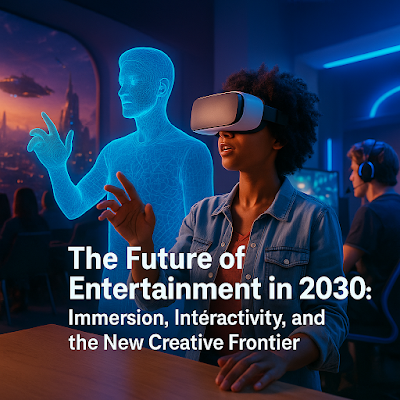
The most significant shift is the decoupling of “live” from “co-located.” The future sees the rise of the distributed live event, where a physical core audience in a flagship venue acts as the catalyst for a global, digital audience participating in real-time. This is not a livestream; it is a parallel experience. Remote participants will don high-fidelity VR headsets and enter a digital twin of the venue. Their avatars will be present, visible to the physical crowd on massive LED screens, creating a feedback loop between the two realms.
In this virtual space, the laws of physics are optional. Remote viewers can choose their vantage point—from the front row to the drummer’s shoulder to a camera rig floating above the crowd. They can interact with the environment and with each other. A shared gesture system allows a million remote users to create a “digital wave” that is visually rendered inside the physical arena. The performer can “reach out” into the digital space, plucking a glowing orb from the virtual crowd that represents their collective energy, and use it to trigger a pyrotechnic effect in the physical world. This two-way interaction is the key differentiator: it makes the remote audience active co-creators, not passive observers.
Monetization and the New Economy of Presence
This distributed model fundamentally alters the economic structure of live entertainment. The scarcity of physical tickets is replaced by a tiered digital economy.
| Baseline | Free/Sponsored | Low-res, single-angle stream with latency. |
| Premium | Paid | 4K VR, multiple perspectives, spatial audio. |
| VIP Digital | High Tier | Interactive avatar customization, digital meet-and-greet, ability to trigger specific light effects. |
| Physical | Highest Tier | Access to the hyper-physical venue, exclusive haptic zones, and “backstage” digital access. |
Furthermore, non-fungible tokens (NFTs) will serve as more than just collectibles. A digital ticket can be a “proof of presence” that grants the holder perpetual access to a private archive of that specific performance, or even a vote on the setlist for a future tour. The emotional connection to the event is converted into a verifiable, tradeable digital asset, creating a new asset class for fans and artists alike.
The Algorithmic Staging and the Creative Partner
Artificial intelligence will not just enhance the technical production; it will become a co-creator. Generative AI will be used to design real-time visuals that respond to the music’s frequency spectrum, creating an ever-evolving light show that is mathematically impossible to recreate. More profoundly, AI will analyze the audience’s real-time feedback to suggest improvisational deviations to the artists. If the AI detects a spike in energy during a particular bridge, it can suggest extending it for an extra 32 bars, essentially allowing the show’s structure to be a living, breathing negotiation between the performer, the data, and the crowd.
This shifts the artist’s role from delivering a fixed set to conducting a dynamic, algorithmic improvisation. The creative expression is no longer just the song; it is the event itself, co-authored by the audience’s collective subconscious. This necessitates a new kind of performer—one who is as fluent in reading data dashboards as in reading a crowd’s body language.
Conclusion: The Experience Continuum
The future of live entertainment is not a binary choice between reality and digital simulation. It is an experience continuum that flows between physical and virtual spaces, personalized and collective consumption, and passive viewing and active participation. The value is no longer in the “show” itself, but in the unique, data-rich, and interactive relationship between the performer, the content, and the audience. The live event will become a platform for shared data, emotional resonance, and generative creation. The winners in this new landscape will be those who recognize that they are no longer just producing a show; they are engineering a living, breathing, and globally distributed moment of collective consciousness. The future is not a bigger screen—it is a deeper connection. Welcome to the new age of presence.

Related Posts