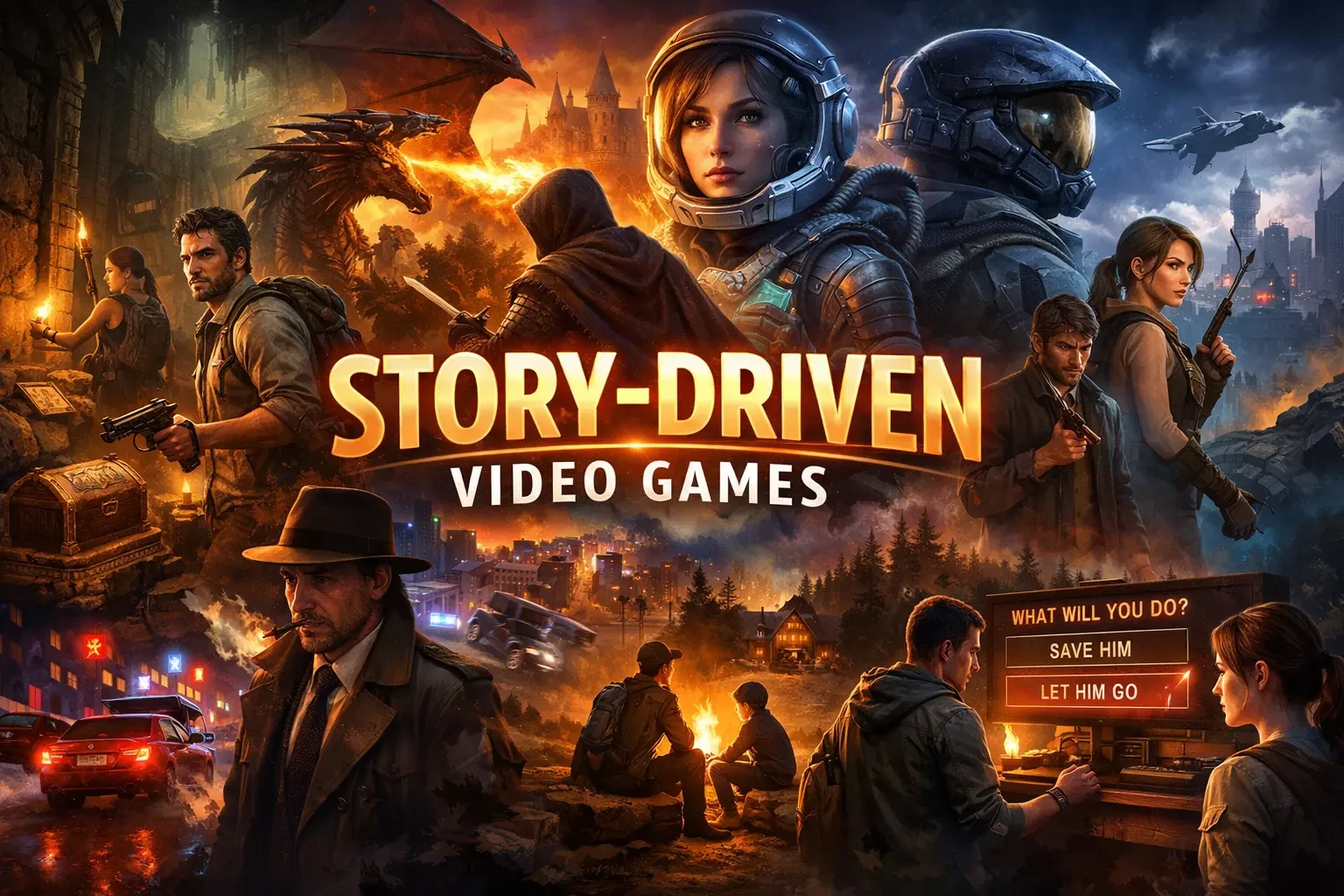

In the rapidly evolving landscape of digital entertainment, a select few video games transcend their medium to become something far greater: cultural landmarks. These are not merely successful products; they are artifacts that have reshaped social interactions, influenced other media, influenced language, and defined the technological aspirations of their generations. Understanding why certain titles achieve this iconic status offers a profound insight into the intersection of art, technology, and human psychology. From pixelated pioneers to cinematic masterpieces, these games function as shared cultural lexicons, providing a common ground for millions of players across global demographics.
The Defining Criteria of a Cultural Icon
What separates a hit game from a cultural touchstone? An iconic game typically disrupts existing paradigms and introduces mechanics or narratives that become industry standards. However, technical innovation alone is insufficient. The true test lies in the game’s ability to permeate mainstream consciousness. This phenomenon is observable when a game’s characters, sound effects, or catchphrases appear in unrelated contexts, such as films, music videos, or corporate advertising. Furthermore, cultural icons foster robust, enduring communities that persist long after the initial release cycle, often driving modding scenes, esports leagues, and academic discourse. They do not just capture a moment in time; they create a temporal anchor that defines their era.
The Pioneers: Laying the Foundation
| Space Invaders | 1978 | Arcade social gathering |
| Super Mario Bros. | 1985 | Precise platforming design |
| The Legend of Zelda | 1986 | Non-linear exploration |
| Doom | 1993 | First-person 3D technology |
The earliest icons emerged from the arcade era, where the very concept of shared digital play was novel. Space Invaders (1978) was not just a game; it was a social phenomenon that drove a coin shortage in Japan. Its algorithmic challenge and hypnotic soundscape created a communal experience in crowded arcades, establishing video games as a form of mass entertainment. Following this, Super Mario Bros. (1985) achieved something unprecedented: it synthesized fluid controls, imaginative level design, and a charming character into a singular platforming experience. Mario became an immediate global ambassador for the medium, a friendly everyman whose red cap and mustache are instantly recognizable to virtually anyone on Earth. This title effectively saved the North American console market and set the standard for design polish that all subsequent developers would measure against.
Simultaneously, The Legend of Zelda (1986) introduced a different kind of icon. Instead of a linear progression, players were given an open world filled with secrets, requiring player-driven exploration and lateral thinking. This gamble established the action-adventure genre and proved that games could offer intellectual depth and personal ownership of the experience. These early titles are crucial because they defined the vocabulary of interactive entertainment. They took abstract technical capabilities and translated them into tangible, emotional touchstones—fun, challenge, and discovery—that resonated universally.
The Narrative Era: Deepening Emotional Impact
As hardware capabilities advanced, the cultural relevance of games shifted from pure mechanics to narrative weight. The Final Fantasy series, particularly Final Fantasy VII (1997), demonstrated that games could handle complex, melancholic stories with cinematic scope. The game’s shocking plot developments and orchestral score elevated the medium to an art form, eliciting genuine grief and reflection from players. This title became a cultural benchmark for the PlayStation generation, proving that video games could rival cinema and literature in emotional gravitas. Simultaneously, Metal Gear Solid (1998) broke new ground in cinematic storytelling and stealth mechanics, questioning the ethics of warfare and genetic engineering. Its intricate narrative and memorable characters turned the game director into a celebrity within the industry, highlighting the role of the auteur in digital media.
The turn of the millennium brought about the emergence of the mature gaming icon with Grand Theft Auto III (2001). This title became a lightning rod for controversy and cultural debate. Its open-world sandbox design—where players could roam a living city and cause mayhem—was revolutionary, but its impact extended far beyond gameplay. It ignited widespread discussions about violence in media, censorship, and the influence of interactive content on society. The game’s satirical portrayal of American culture, combined with its technical audacity, made it a permanent fixture in public discourse. Even those who never played it were aware of its notoriety. This notoriety is, in itself, a form of cultural iconography—the game became a symbol for the provocative power of digital interactivity.
The Online and Esports Revolution
The definition of a cultural icon expanded with the integration of persistent online worlds. World of Warcraft (2004) created a parallel society, complete with its own economy, social hierarchies, and folklore. Its raiding mechanics and guild structures predated modern social media communities, proving that millions of strangers could collaborate and form lasting friendships within a digital environment. The term WoW-addiction entered common parlance, and the game’s references appear in television shows like South Park, cementing its place in the broader cultural narrative. On the competitive side, League of Legends (2009) and Counter-Strike (1999) transformed gaming from a solo or local activity into a global spectator sport. Esports arenas filled with roaring fans, and professional players attained celebrity status with endorsement deals and international recognition. These games turned passion into profession, and their strategic depth has been analyzed with the same rigor as traditional athletic sports.
The Modern Narrative Blockbusters
In the contemporary era, icons are built on the foundation of artistic spectacle and interactive agency. The Elder Scrolls V: Skyrim (2011) became a ubiquitous presence due to its immense open world and sheer moddability. Its iconic opening sequence and the phrase “Fus Ro Dah” have been parodied and referenced endlessly, demonstrating that a game does not need a movie adaptation to achieve mainstream crossover appeal. Similarly, The Last of Us (2013) set a new standard for narrative sophistication, using interactive parent-child dynamics to explore themes of love, sacrifice, and moral ambiguity in a post-apocalyptic setting. Its 2023 television adaptation proved that the source material was robust enough to carry a premium prestige drama, solidifying its status as a transmedia icon. Minecraft (2011) remains arguably the most successful cultural icon of all time, not due to high-fidelity graphics, but because it empowers limitless creativity. It has become an educational tool, a therapeutic medium, and a digital sandbox for entire generations, demonstrating that cultural impact is inversely proportional to rigid structure.
Why Iconic Status Matters
The cultural significance of these games cannot be overstated. They function as shared narratives in a fragmented digital world, providing a common vocabulary for diverse populations. They drive technological innovation in graphics, artificial intelligence, and user interface design. More importantly, they offer a lens through which we can examine societal anxieties and aspirations. The fears of corporate control in Deus Ex, the environmental warnings in Final Fantasy VII, and the exploration of identity in Mass Effect are cultural critiques that resonate beyond the screen. These games are not just pastimes; they are historical documents that chronicle the evolution of our relationship with technology.
As the industry continues to grow with virtual reality and cloud gaming, the question remains: which new titles will achieve this enduring mythos? The answer lies not in graphical fidelity, but in the capacity to foster genuine human connection and provoke enduring thought. The icons discussed here—from the silent jumps of a plumber to the strategic lanes of a MOBA—share a common trait: they are built on a core truth about the human condition. Whether it is the impulse to explore, to compete, to create, or to care for others, these games distill that truth into an interactive format. They become icons not because they are perfect, but because they reflect us, with all our strengths and flaws, in the most compelling digital mirror we have ever constructed. Their legacy is not measured in sales figures alone, but in the countless moments of shared joy, catharsis, and discovery they have sparked in the hearts of players worldwide.

Related Posts