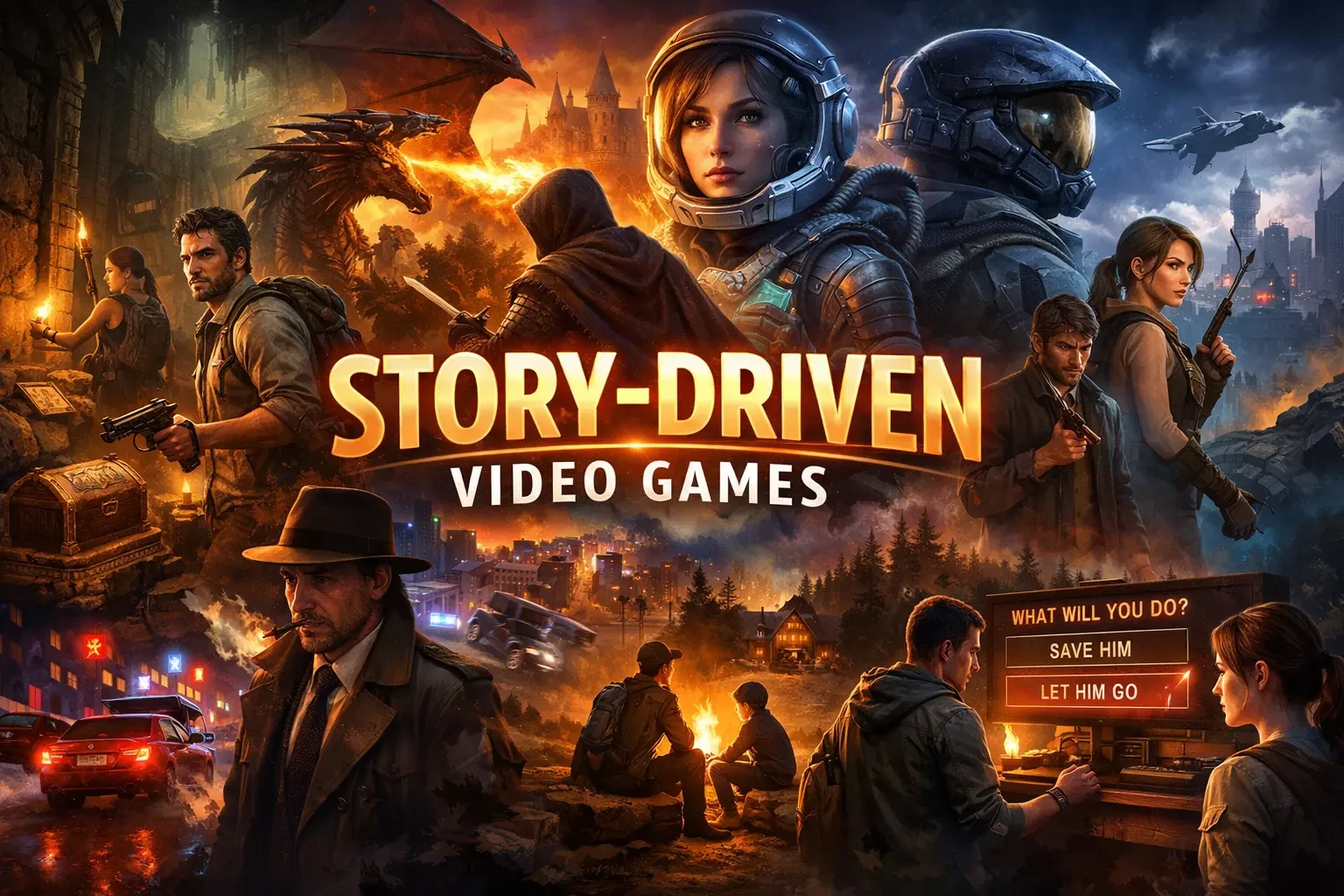
The digital entertainment landscape is undergoing a seismic transformation, driven by the relentless evolution of gaming. What was once a niche hobby has become a dominant cultural and economic force, outpacing the film and music industries combined. For developers, investors, and tech enthusiasts, understanding these shifts is critical. This article dissects the key gaming trends that are not merely passing fads but structural changes redefining how we interact with digital worlds.
The Rise of Cloud-Native Gaming Ecosystems
The traditional barrier of high-end hardware is crumbling. Cloud gaming, once a futuristic promise, is now a practical infrastructure. Services such as Xbox Cloud Gaming and NVIDIA GeForce NOW are shifting the processing burden from the consumer’s device to massive data centers. The result is a democratization of access: a low-end laptop or smartphone can now render AAA titles in 4K resolution with minimal latency.
This trend is reshaping monetization models. Instead of purchasing individual games, players are gravitating toward subscription ecosystems that bundle gaming with other media. The long-term implication is an “all-you-can-play” model similar to streaming video, where user engagement and retention become more critical than unit sales. For tech companies, this means optimizing edge computing and network infrastructure to reduce lag to sub-20 milliseconds, a threshold now considered essential for competitive play.
Artificial Intelligence as the New Game Architect
Artificial Intelligence is no longer confined to non-player character (NPC) pathfinding. The industry is now leveraging generative AI to create dynamic narratives and infinite worlds that adapt to individual player behavior. Instead of scripted dialogue trees, we see AI-driven systems that generate dialogue, quests, and even entire environmental layouts in real-time. This dramatically reduces development time while increasing replayability, as no two playthroughs are identical.
Beyond content creation, AI is powering sophisticated anti-cheat systems and player matchmaking. Deep learning algorithms analyze millions of match outcomes to create balanced team compositions and detect toxic behavior with greater nuance than human moderators. The professional voice in this space is clear: AI is not a replacement for creative vision but a force multiplier that allows small studios to produce content that rivals major publishers.
The Procedural Generation of Social Platforms
The boundary between playing a game and attending a social event is dissolving. Platforms like Roblox and Fortnite are no longer games in the traditional sense; they are user-generated metaverses. Users spend hours not on combat missions but on attending virtual concerts, film premieres, and brand pop-ups. This trend of “social gaming” has profound implications for digital entertainment, as it merges gaming mechanics with streaming services and e-commerce.
Brands are investing heavily in persistent world assets that exist across multiple game titles. A virtual sneaker purchased in one ecosystem might become an avatar accessory in another, facilitated by blockchain-backed interoperability protocols. The data analytics from these social platforms provide advertisers with unprecedented insight into consumer behavior, far richer than passive viewership metrics from traditional media.
Hyper-Realistic Graphics and the Uncanny Valley
Visual fidelity continues to be a major market differentiator. The introduction of Unreal Engine 5 and its Nanite and Lumen technologies has enabled photorealistic rendering at scale. This trend pushes digital entertainment closer to a unified visual language where films, games, and real-time simulation are indistinguishable. However, the industry is also confronting the uncanny valley—the point where near-perfect realism induces discomfort.
To cross this threshold, studios are employing advanced motion capture and volumetric video techniques to capture subtle muscle contractions and eye movements. The result is characters that convey genuine emotional depth, making narrative-driven games more cinematic than ever. On the technical side, this requires insanely efficient asset streaming algorithms and compressed texture formats to keep file sizes manageable.
The Mobile Gaming Revolution: Beyond Casual Play
Mobile gaming has exploded beyond simple puzzle titles. The rise of 5G connectivity and advanced smartphone GPUs has enabled the platform to host 100-player battle royales and fully-fledged MMORPGs. This trend is blurring the line between console and mobile, with cross-platform progression allowing players to start a session on their PC and continue seamlessly on a mobile device during their commute.
Moreover, the monetization strategy for mobile has shifted. While ads and micropurchases remain prevalent, we are seeing a surge in mobile game controllers and physical peripherals, indicating a more dedicated, hardcore player base. For developers, this means designing user interfaces that are tactile yet non-intrusive on touchscreens while retaining the graphical complexity expected by core gamers.
Competitive Gaming and the Esports Infrastructure
Esports has matured from underground tournaments into a multi-million-dollar professional sports industry. The infrastructure supporting this trend is growing complex: franchise leagues with salary caps, dedicated arenas with fiber-optic connections, and big data analytics tools that provide real-time performance feedback to coaches and players. This professionalization is attracting non-endemic sponsors, including luxury car brands and financial institutions.
The impact on digital entertainment extends to content distribution. Major esports events now rival traditional sports finals in viewership, and the viewing experience is evolving with integrated betting pools and interactive stat overlays. The technology stack behind this includes:
- Low-latency broadcast pipelines with sub-second delay.
- Machine learning models for predicting match outcomes.
- Augmented reality interfaces for overlaying player stats on live streams.
Key Metrics in the Esports Sector (2024 Data)
| Tournament Prizes | $23.5M | +12% |
| Sponsorship Deals | $312M | +18% |
| Media Rights | $74M | +22% |
Conclusion: The Convergence of Play and Utility
The gaming trends shaping digital entertainment are converging toward a single golden thread: the gamification of all digital interactions. From cloud infrastructure democratizing high-fidelity play to AI generating infinite content and to the social metaverse replacing traditional social media, the potential is vast.
For technology professionals, the takeaway is clear: invest in scalability, adaptive content engines, and robust streaming capabilities. The competition is no longer for the gamer’s leisure time, but for their entire digital identity. The future belongs to enterprises that treat gaming not as an isolated product category, but as the foundational layer of interactive media. As these trends accelerate, those who fail to adapt will be left to play on yesterday’s hardware.

Related Posts